Last Updated: 4/15/2024
Name: Sakavian
Humanoid: No
Classification: Gastropod/Alternative/Diminutive
Homeworld: Sakavi Tar
Coloration: Orange and Tan
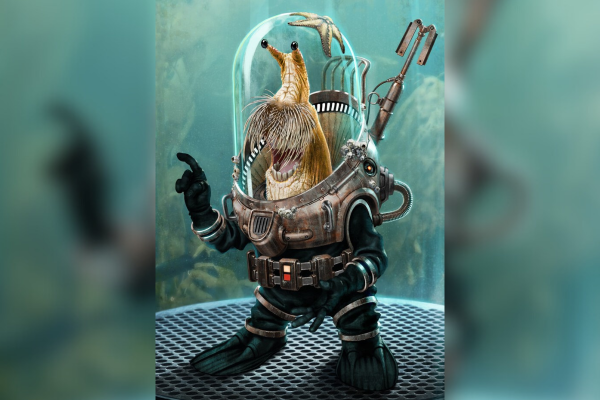
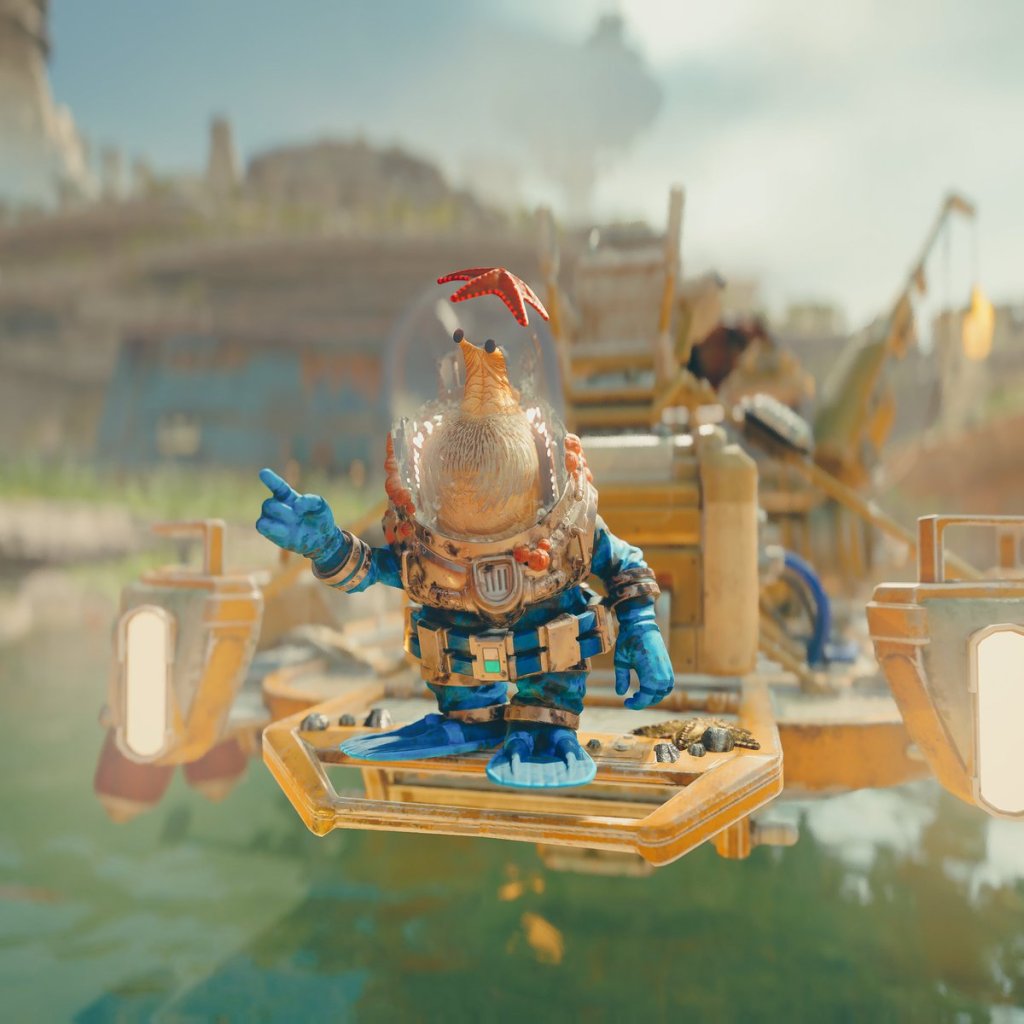
Biology: Sakavians were a bipedal gastropod species that stood no taller than .6 meters on average when fully grown. Skakavians had primarily orange skin that was darker on their back while it grew much lighter in coloration around their chest and face, though all of it was wrinkled and cracked. They had rounded bodies with stubby limbs, their hands having four fingers while their feet appeared to have two elongated toes. Their heads-growths extended directly up from their torsos, with wide mouths full of long white teeth situated on the front, while they had two eyestalks perched on top, each tipped with solid black, glossy eyes. They also had a patch of long quill-like hairs surrounding their mouths, taking on the appearance of beards.
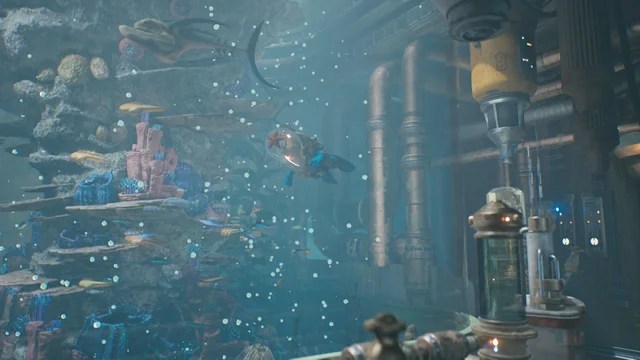
Sakavians had a high tolerance for the cold, which allowed them to live on their frigid homeworld relatively unimpeded. Though they spent much time underwater, Sakavians required special temperature and pressure regulated breather suits to survive when submerged, and potentially anywhere outside of their homeworld as well. They existed on a diet solely of fish, and were fairly proficient swimmers given the right equipment. We also know Sakavian women produced milk during child rearing. They also had the capacity to speak Galactic Basic, albeit with a particularly loud, boisterous, and thick “Scottish” accent.
Lore: The Sakavians were a small and rather obscure species hailing from the frigid planet of Sakavi Tar, a world whose present location currently remains unknown, potentially intentionally. The planet was covered primarily in deep, icy seas, and was home to numerous aquatic animals, with some rather large ones being considered the planet’s apex predators. There were also a handful of fish which had seemingly been stocked there from other worlds at some point in the past, such as the Mee Fish from Naboo, though when and why this happened is unclear. Unfortunately, due to overfishing in the years leading up to the rise of the Empire, primarily by the native Sakavians, at least at first, Sakavi Tar entered an era known as the “Great Fish Famine.”
Sakavian tribes were situated in villages spread out all across the various glaciers and icebergs that dotted Sakavi Tar’s otherwise oceanic surface. Most of these communities revolved around the planet’s fishing industry, and the species had developed the necessary fishing, boating, and diving technologies to efficiently accomplish their necessary tasks, and were known to engage in quite a bit of maritime activities, crewing skiffs and other seafaring vessels as they explored the icy seas, though it would seem they did not have access to interstellar travel. The species was very “stereotypical” in their nautical ways, constructing traditional wharfs in harbors, gathering at pubs to recount their tales of great fish, vast sea creatures, and treacherous waters, and just all around embracing the visage and mannerisms of what many would consider to be hackneyed sailors.
As news spread of the once bountiful fishing opportunities found on Sakavi Tar, more and more offworlders traveled to the world to catch their fill and profit off of the almost defenseless people found there. By the time many of these outside fishermen arrived, however, the planet’s famine had already begun, and the industrial methods these larger, more advanced harvesters would employ only expedited the decline of edible fish populations at accessible depths. One such set of visitors were the crew of the “Grapnel,” fishermen in search of the rarest most exotic catches. To prevent them from further threatening the local ecosystem, one Sakavian and master fisherman by the name of Skoova Stev embarked aboard the Grapnel to help them locate and catch valuable fish on other worlds in exchange for their retreat from Sakavi Tar and promise not to return.
Sadly, after some time, this agreement was broken and Stev was kicked from their crew so that they could continue their malicious endeavors. By the time the betrayed fisherman finally made it back to his home, he would learn that his entire village had died of starvation, a fate that seemed inevitable for the majority of his species. Stev would eventually relocate to Koboh to attempt to live a solitary life, fishing the innumerous fish species found there. And while he would thrive, gaining various allies, accolades, and employment, the rest of the species sadly faced extinction due to their dwindling food source and inability to escape. Notably, Sakavi Tar was apparently home to an ancient, massive, tentacled creature known as Oondun, who was revered by the locals and seemingly the subject of various legends and rites of passage for the local fishermen.
Continuity: The Sakavians are exclusive to Star Wars Canon thanks to their introduction within “Star Wars Jedi: Survivor,” though most of their lore comes from stories recounted by one character, the aforementioned Skoova Stev, who may or may not be 100% reliable. Only time will tell how true the history he’s relayed is, but for now, we have no choice but to consider it official as it’s the only iteration we’ve received so far. (And yes, I can’t believe I still have to reiterate this, but the “Jedi” games, “Fallen Order” and “Survivor,” ARE Canon, that is not up for debate.)
Unexplored: This is one of those weird cases where we do technically know things about a species, but the credibility of what’s been established has to be called into question. And we currently have no reason to question the validity of their lore, no conflicting accounts or in-universe inquiries, outside of simply the method in which it was relayed and who did the relaying. So the first question we must ask here, though there’s a good chance we already have an answer, would be: is everything we’ve learned about the Sakavians so for directly from the mouth of Skoova Stev reliable, or should it be discarded as nothing more than tall tales and exaggerations for the sake of a good story? From there, we can delve deeper into more basic questions, including elements like: When did the Skavians develop sentience? What in the galaxy might they have evolved from? And despite their homeworld, why are they neither amphibious, nor particularly acclimated to the cold?
How did offworld fish species end up on the planet in the past, and who might have brought them there? What exactly did the surface (and depths) of Sakavi Tar look like, and what possible environments might it have had? Were there any plants, ores, or non-aquatic wildlife? Where did the Sakavians get the materials necessary to construct their structures and fishing technologies? What was the size of the Sakavians population at their peak, as well as by the time of famine? Was the famine truly planet-wide, or was it localized to certain areas? Was there a chance of recovery for the local fish populations, were their untapped schools far within Sakavi Tar’s depths, and how long did it take for the planet’s fishing practices to bring them to this point? When did offworlders first discover the planet’s good fishing, how frequently did they appear, and was the problem still growing worse? And finally, were the Sakavians truly facing a slow and painful extinction?
Additional Notes: There are quite a few reasons as to why I absolutely adore the Sakavians, including the charm and uniqueness of their overall design, Skoova Stev’s particular voice and mannerisms, and even just the fact that, as of the publishing of this article, they are only one of two of the slate of new species introduced in “Jedi: Survivor” to officially be named so far (the other being the Waluna, while the “Kermitians” were a fake, fan-made reveal). I can’t wait until more get named, and I’m also hopeful for some more expansive, concrete Sakavian lore, as they’re a fascinating and distinct species more than deserving of it!
Reference Images:

 Star Wars Fan Publications
Leave a comment