Last Updated: 4/5/2024
Name: Ansionian (Gwurran)
Humanoid: Yes
Classification: Near-Human/Alternative
Homeworld: Ansion
Coloration: Yellow, Brown, or Gray
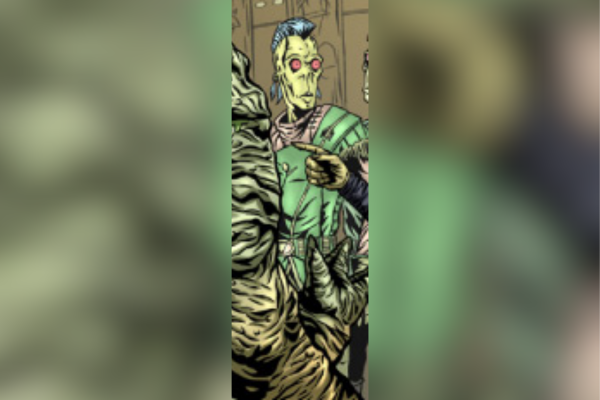
Biology: Baseline Ansionians were a bipedal humanoid species, standing just slightly shorter than standard Humans on average. The species had two arms, two legs, and one head, with skin that was varying shades of pale yellow in coloration. Ansionians were also a hairless species, save for one strip of fur that ran from their upper forehead, over and down the back in cranium, ranging widely in color, though we’ve observed it being gray, brown, and blue. With slender yet muscular frames, the Ansonians were considered rather lanky, and had long, three-fingered hands. They also had stubby tails extending from the back of their waist that was usually hidden underneath their clothing.
Perched atop their long necks were stretched craniums bearing sharp facial features and pointed chins. Though their mouths were relatively scrunched, they still had rather large lips that hid their sharp teeth. They also had an upturned nose sporting a single, distinct nostril, despite sometimes appearing as if they had two. Ansionian eyes were round and almost bulging, generally being bright red, though also observed as occasionally being pink, mauve, or yellow as well, with small black pupils and no visible irises. Their eyelids also closed inward vertically as opposed to most species’ horizontal configurations. Though lacking a traditional ear structure, they also did still possess apparent aural cavities which were situated on the upper-side portions of their heads.
Ansionians had superb eyesight, capable of seeing clearly in low-light environments including nighttime and caves. Internally, they had multiple “hearts,” though we don’t know how many or where they were placed. The species were considered warm-blooded mammalians, and their body temperature was naturally much higher than that of Humans. We know the species could speak Galactic Basic, though they usually preferred their own loud language, also simply referred to as “Ansionian.” They were said to have loud, boisterous voices that boomed when they yelled or laughed.
Aside from standard Ansionians, there was also a secondary subspecies found exclusively on their homeworld of Ansion referred to as the “Gwurran.” These individuals were considered the “cavemen” of Ansion, a devolved group of primitives closely related to the rest of the planet’s population, and thus not considered a separate species entirely. Though possessing similar body and head shapes, the Gwurran stood even shorter than baseline Ansionians, with a more slouched posture, larger appendages, even bigger eyes, and an elongated tail that could be upwards of a meter in length. One of their most distinguishable traits, however, was the fact that they were entirely covered in fur. This fur could be the same color as the hair seen on regular Ansionians, though it was often patterned as well. Though unconfirmed, it’s possible the Gwurran were subterranean in nature, possibly possessing pronounced ears, and only able to speak broken, gruff Basic and Ansionian.
Lore: The Mid Rim world of Ansion was a surprisingly new discovery within the galactic timeline, not explored by the Galactic Republic until some time between 3000 BBY and 1000 BBY. This made the species a relatively new addition to the intergalactic landscape, though they were quick to join the Galactic Republic and gain representation on the Republic Senate. Despite holding such a prestigious position, however, they kept a relatively low profile, with little political sway, as well as next to nothing to offer the Republic. Still, their homeworld was known for its tranquil, lush landscapes perfect for farming both crops and livestock, and the humble Ansionians lived in peace for seemingly many millennia.
Ansion was known for its high winds which forced the species to develop structures and lifestyles that could accommodate the natural forces which constantly bombarded them. While offworlders could find them quite destabilizing, everything found there, whether civilization, plant, or animal, had long-since developed a tolerance to the winds and paid them no heed. Because of this, however, it was relatively uncommon to see non-Ansionians visiting the planet (though there was still a fairly large population of Human colonists), and while they developed their technologies and cities very quickly following their discovery, they maintained much of their own identity with little outside influence, especially when it came to those who lived rural lifestyles.
The Ansionians, of which there were only 18 -19 million documented at any given time, were roughly broken up into three primary cultural groups, those being the “Urbanites,” the “Alwari,” and the “Gwurran.” The Urbanites made up the majority of the population, being those who lived among the various large cities spread out across the planet’s surface. The Ansionians were relatively well-to-do, and lived under the rule of the “Unity of Community,” a loosely unified planetary governmental body led by a seven-man “Unity Council” established to mediate conflicts and maintain peace on the world, though, according to some Ansionians, they occasionally overstepped their boundaries and stuck their political nose where it was not welcomed. Overall, however, they were viewed favorably by most, especially by the few offworlders who settled on the world in the centuries leading up to the collapse of the Republic.
Unlike the Urbanites, the Alwari consisted of a conglomerate of rural tribes who actively opposed the concept of the Unity of Community and instead each tribe should govern themselves, or should at least have the choice whether to unify or not. The Alwari lived nomadic lifestyles, never staying in one place for too long. Many of their beliefs came from an almost pseudo-religious mindset, though it was never officially considered a unified faith. Still, they all collectively disapproved of technologies, especially those imported from the outside galaxy, and actively sought to live primitive lives, utilizing simple tools, constructing temporary dwellings, donning plain robes, and consisting on diets primarily made of meat. They had many communal ceremonies and sessions, strongly revered their ancestors and the ancient ways of their people, and often relied on silent methods of communication, such as cracking their knuckles to showcase approval.
The Alwari also sometimes liked to settle disputes via violent clashes between clans, one of the actions that had actually originally spurred the creation of the Unity so many years ago. The new government began interfering with these conflicts and attempting to force the tribes to always settle disputes through peaceful negotiations, which immediately offended the various Alwari communities. The Alwari would, in fact, put aside most of their differences after this point, though they were only united due to a newfound common enemy, that being the Unity of Community. Though the newly established coalition did not rebel against the governmental system by force, they perpetually voiced their disdain, and attempted to convince members of the Urbanites to join their movement.
In the years that followed, the Alwari grew closer and closer, becoming almost a single nation of their own, including their own governing bodies known as the councils of elders. These councils each belonged to the largest and most powerful tribes known as the “overclans,” with the two most prominent major tribes being the “Borokii” and the “Januul,” rivals who often budded heads when it came to major decisions. They gave birth to subclans, like the “Situng Borokii” and the “Hovsgol Januul,” and held major sway over the various region based tribal factions i.e. “Northern Bands,” “Southern Hatagai,” etc. Further tiered beneath them were the minor clans, with many making up each faction, and distinguished primarily by the coloration and style of their clothing.
While the Alwari were forming into a much more organized superfaction and the Unity continued to enforce peace throughout the urban communities, the Gwurran subspecies existed in their own little reality. The Alwari lived simple lifestyles by choice, however, the Gwurrans were still in a primitive stage of their evolution, causing other Ansionians to look down on them despite leaving them to their own devices. Living among the hills and caves of particular portions of the planet, the Gwurrans were scavengers and thieves, unable to really farm so instead resorting to raids from those who did. Many viewed them as pests because of this, and there’s no evidence anyone ever contributed to their development or offered them aid or teaching. The Gwurrans could speak broken versions of the Ansionian languages but rarely attempted to communicate with baseline Ansionians or develop relationships. They were also very religious, with their devout worship of elemental/weather entities like the Miywondl and Kapchenaga potentially further alienating them from their peers.
A couple decades prior to the start of the Clone Wars, the Ansionians were one of four species to collective come together and form the “Malarian Alliance,” alongside three other species, the titular Malarians, as well as the Dbarians and the Mamendin. This alliance was equally beneficial for each race, granting trade certainty between them and their own partners, and placing Ansion securely along the “Namadii Corridor” and “Rago Run” Trade Routes, though the Malarians and Ansionians seemed to be the most prominent. Not long after, they also strengthened their presence further by being one of seven planets to sign the “Keitumite Mutual Military Treaty,” with each member pledging they would come to the aid of others should they be in trouble, and maintaining healthy trade and commerce in the meantime. Just as with the Malarian Alliance, the Ansionians were seen as the second most powerful of the group, just after the Keitumites who had initiated the treaty.
Given their sudden rise in small-scale political influence, options for resources, and strategic location along a trade route junction, the Ansionians eventually captured the attention of the infamous “Commerce Guild,” who thought they could become a valuable asset within the budding Separatist movement growing throughout the Republic, adding them to a small list of planets that checked all of the necessary boxes. Hoping to sway them into seceding alongside the dozens of other Separatist-allied worlds, Commerce Guild Presidente Shu Mai personally began a campaign to disrupt the Ansionian status quo and turn public opinion away from the Republic.
Mai began this campaign by establishing a relationship with the current Ansionian Senator, Mousul, recruiting him into her entourage, disillusioning him against the Republic, and conspiring with him to begin to secretly inject anti-Republic sentiment into the world he had been chosen to represent. After his loyalty had been firmly secured, the next step was to dispatch Commerce Guild agents to Ansion, who infiltrated both the Urbanite and Alwari communities, rallying them against each other through rumors and propaganda. Additionally, they began paying off local crime lords such as the influential “Bossban,” Soergg the Hutt, to incite violent acts that could then be blamed on one group or the other, seeding unrest and causing protests and riots to break out all across the planet.
By 22 BBY, the stage was set, the Separatist-minded had just begun the process of seceding, and the political climate on Ansion was the most volatile it had ever been. With the Unity of Community in disarray, the Republic made a last-ditch effort to maintain their allegiance by dispatching a contingent of Jedi, consisting of legendary Masters Luminara Unduli and Obi-Wan Kenobi, as well as their infamous apprentices, Barriss Offee and Anakin Skywalker. Despite the hardships they encountered, including societal unrest, rampant misinformation, kidnapping, and assassination attempts, the Jedi were able to put down the growing threats of a civil war, uniting the multiple Alwari tribes, including the Borokii and Januul, under a singular, grand “Council of Alwari Elders,” then repairing their relationship with the Unity, identifying the Separatists as the real culprits behind the tumultuous state of their world.
A vote was taken and the Unity decided it was in their best interest to remain allied with the Republic, Shu Mai’s plans for this particular world (and it’s allies) being foiled, though many of her other ongoing schemes at this time would ultimately succeed. Most of the planted dissenters were also removed through various means, though Soergg the Hutt would get off scot-free. With a renewed sense of community and patriotism, as well as an almost planet-wide admiration for the Jedi Order, the species would thrive during the Clone Wars. More species would begin to immigrate to the windswept world around this time, including the aforementioned Hutts, as well as another fascinating race known as the Armalat, green giants who began taking up residence on the planet, potentially as refugees. One of these Armalats, a man by the name of Tolut, even became a member of the Unity Council at this time, able to accurately represent the growing presence of his people.
When the Republic transitioned into the Galactic Empire, their newfound aversion to anything even associated with the concept of “rebellion” saw them welcoming the newly established governmental system with open arms. They pledged their allegiance and cooperation to the Empire, and were assigned an Imperial Moff shortly thereafter. In compliance with the new regime, they began dissolving their previous alliances, including the Malarian Alliance and the Keitumite Mutual Military Treaty, removing the possibility for a collective insurgency and taking one more looming threat to the Empire off the board. During the next two decades, however, the Ansionians would learn the true depths of the Empire’s uninterest in their wellbeing and the oppression that they felt necessary to enforce the security they promised.
Despite their initial philosophy moving into this new era, a growing anti-Imperial sentiment had been brewing on Ansion by the pinnacle of the Galactic Civil War, their resistance spurred on by the public actions undertaken by the budding Rebel Alliance. Shortly following the Battle of Yavin and destruction of the first Death Star, Ansion was declared as a target for an all-out Imperial slaughter, meant to serve as an example to other words who threatened to join the Alliance. Learning of these plans, the Rebellion dispatched a squadron of elite fighters to warn the rebel sympathizers on the world and aid in their defense. Though the details of the incoming battle are not detailed, it would seem the Ansionians’ fortification was successful, and they would join the New Republic sometime afterwards.
The following years saw the planet go through various tribulations, unwillingly handed off from faction to faction, beginning with a full-scale occupation by Grand Admiral Thrawn’s Imperial faction. This sudden invasion left them cut off from their allies in the New Republic, and without the apparent strength to fight back. That would not necessarily be required, however, as a short time later the planet was swept up by the Yuuzhan Vong during their takeover of the galaxy, resulting in significant casualties, as was the case with most of their victims. Once again, governances would change as the Vong’s numbers began to wane and they were driven offworld by yet another Imperial Faction looking for a stronghold. And unfortunately, this would be the last report made public regarding the fate of Ansion, occupied with no chance of freedom during the coming eras.
Continuity: The Ansionians are a species technically currently still exclusive to Star Wars Legends, though Ansion has been referenced a few times within Canon, and while it’s inhabitants have been alluded to, there has been no direct confirmation whether these were a native species or some other part of the non-native population.
Unexplored: In their few appearances, the Ansionians established themselves fairly well, with some extended lore, in-depth exploration of their homeworld and subcultures, and exploration of their history and alliances. Still, there are a few various questions we can pose that would help us understand them even better, and, of course, if they ever make the leap into Canon, they’ll be a blank slate who will probably only retain some of their pre-established lore if previous trends are to be taken into account. So, let’s start with the question that’s shared among most species, being: when did the Ansionians first develop sentience, and what sort of creature did they evolve from? We can assume they’re a newer sentient species than many given the fact a “caveman” subspecies still exists on the world, though I guess that leads us to our next question. Why do the Gwurran exist? Are they the previous stage of Ansionian evolution, potentially the next, just an alternate adaptation due to environment, or something else?
Why were the Ansionians so late to be discovered, especially if their homeworld was situated among the well-mapped Mid Rim? What did the various groups and subspecies first think of the Republic explorers who descended from the skies, and exactly how quickly did they formally join the Republic? What drew so many other species to Ansion despite the harsh, or at least uncomfortable environments found across the world? What sorts of unique traditions, habits, and cultural practices did they originally boast, and what sorts of outside influences did they adopt following their integration into the greater galaxy? Aside from just general technologies, what other specific things did the Alwari strongly oppose, and what particular beliefs or philosophies did they develop post-breakaway from the Urbanites? Additionally, how did the process of joining their various coalitions go, why were they always a prominent member, and after dissolving did they ever return some time in the distant future in some way, shape, or form?
Did the world suffer at all given their sudden turn away from the Commerce Guild’s plans? What happened to the Senator who had been bought out by Shu Mai prior to the start of the Clone Wars? Did certain groups on the world turn to Jedi worshiping after the Order’s brief mission there, how would those beliefs had changes after the Great Jedi Purge began and the Empire came to authority over their planet, and did Anakin Skywalker/Darth Vader ever return to personally handle those he had previously helped unite and put in power? How long did it take for the Ansionians to turn on the Empire? Was it true they were harboring official members of the Rebel Alliance by the height of the Galactic Civil War? How did the defense of their world go when they were targeted for annihilation? What specifically happened to the species, both as a whole as well as in their individual groups, during their time under the New Republic, Thrawn’s Confederation, the Yuuzhan Vong, and the later Imperial Remnant? And finally, what was the fate of the species during the furthest reaches of the EU timeline specifically?
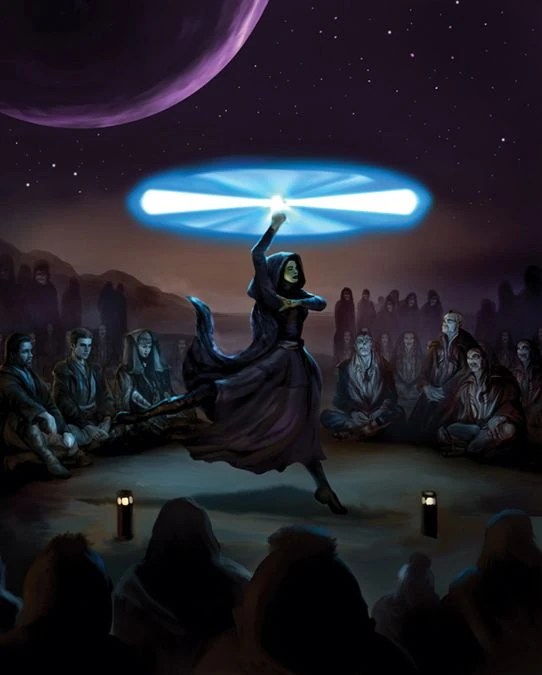
Additional Notes: This is one of those species that really surprised me once I began to dig deeper into their lore! They’re definitely in need of some better depictions/illustrations (something I probably should have mentioned in the section above), which has probably already been made clear given what I had to work with for the featured image above and additional reference photos below. The fact that much of their pivotal lore around the late Republic era comes specifically from the now-defunct “HoloNet News” site is equal parts fascinating and frustrating, one of many tragic examples of the EU being distributed through a temporary, non-physical format that’s now fairly annoying to access. Still, I think there’s absolutely a future for this species among the current continuity, and hopefully, with that, we will get our first clear look at both the baseline Ansionians, as well as the Gwurrans! (I also finished up this article the day “Tales of the Empire” was announced, making Barriss’ long awaited return pretty coincidental as I rarely write anything mentioning her!)
Reference Images:


 Star Wars Fan Publications
Leave a comment