
Last Updated: 2/23/2024
Name: Hamadryas
Humanoid: Yes
Classification: Near-Human/Beast (Simian)
Homeworld: Unknown
Coloration: Green
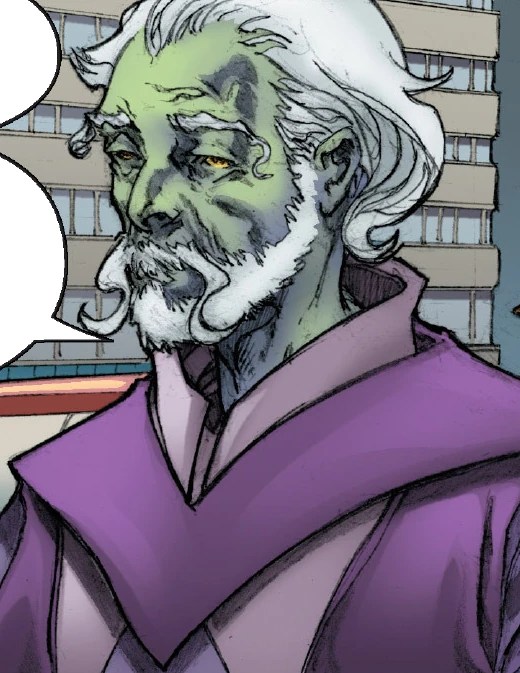
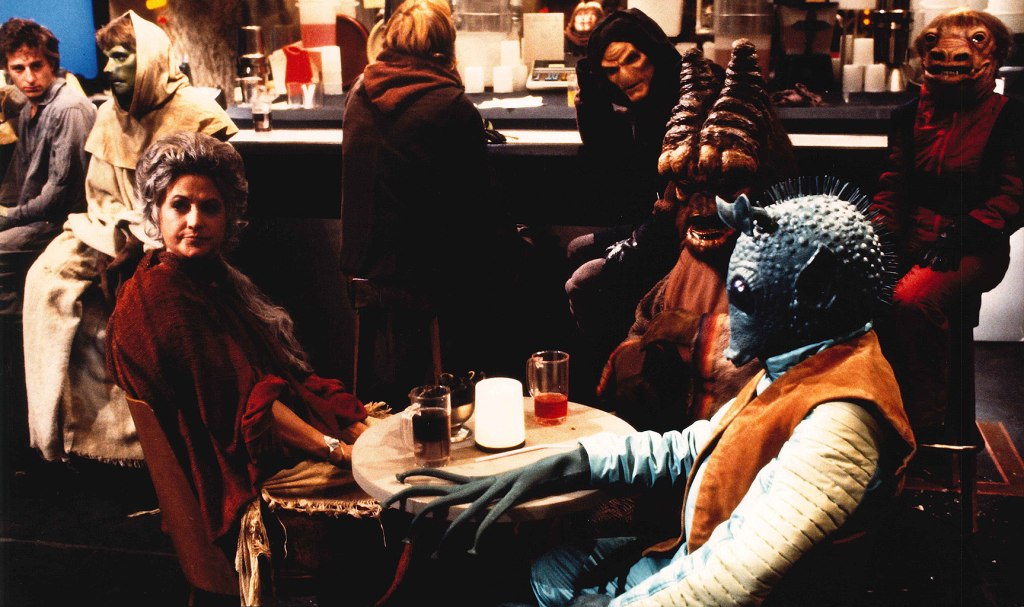
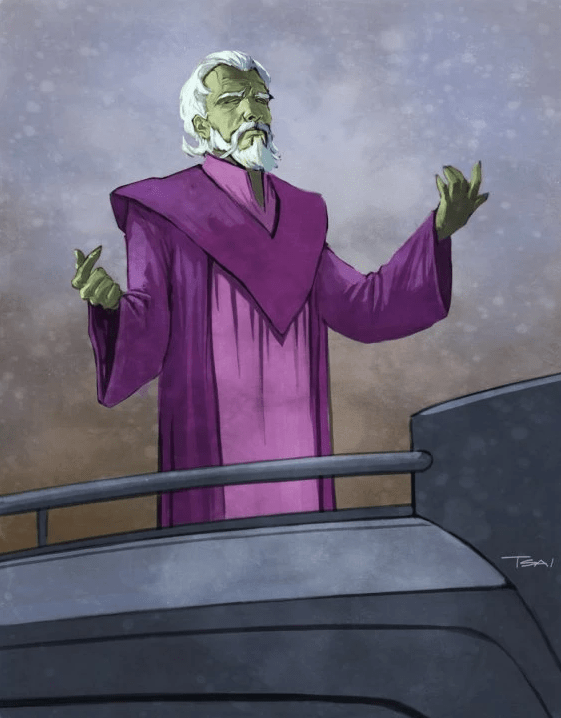
Biology: The Hamadyras were known for being a fairly near-Human species featuring at least a few notable differences from their Human counterparts. Compared to Humans, they had the same general height, weight, build, and frames, being bipedal, with two arms and two legs, each of their limbs ending in five-fingered appendages. They also seemingly shared many of the same internals, including very similar reproductive organs, though they were said to have lacked a “true” carotid artery. They primarily differed when it came to their pigmentation, with Hamadryas having dark green skin with a noticeable sheen. They also had somewhat ape-like, more specifically baboon-like, faces, with pronounced brows and cheek bones, flat lips, and upturned noses. The species also lacked eyebrows, and may have been incapable of growing any facial hair.
One notable trait the species possessed was their lack of blinking, possibly not even possessing eyelids, though, at the very least, they had a way to maintain their eyes’ moisture while remaining perpetually open. Hamadryas were capable of pronouncing Galactic Basic with seemingly no issue, though they also had their own language, also known as “Hamadryas” as well. Hamadryas were capable of reproducing with Humans, compatible enough to birth hybrid Human-Hamadryas offspring. These hybrids were known for being mostly Human-like, lacking the simian facial features, though they still maintained the distinct green pigmentation. Hamadryas seemed to usually have orange, orangutan-esque hair on their heads, and we know, at least with the hybrids, that this hair whitened with age.
Lore: Little is known about the Hamadryas, including where they truly hailed from. They were seemingly a well-known species, even counted among other famous (or infamous) established species like the Humans, Wookiees, and Weequay. They also had at least some ties to the Republic, and had been introduced into the galaxy some time prior to the latter days of the Old Republic era, at least before 4000 BBY. One prominent Republic Senator during this time, a man by the name of Haydel Goravvus, was a Human-Hamadryas hybrid who represented the planet Taris. While not their homeworld, Taris was a widely diverse planet housing a number of immigrated species, including a number of Hamadryas. The species could still be found spread across the galaxy by the time of the Galactic Civil War, with one, Cebann Veekan, even becoming a galaxy famous actor.
Continuity: The Hamadryas remain exclusive to the Star Wars Expanded Universe at the moment, being one of the few named live action species where this is the case given their inclusion (and introduction) within the Star Wars Holiday Special. It’s also worth noting that, while never officially published in anything, it was revealed by author Bob Vitas (the man who gave the species their name and some lore via the now defunct Hyperspace’s “What’s The Story?” feature) that he had every intention of making their homeworld a planet by the name Papio. Papio has never been mentioned in anything else, however, if it is in the future, I will probably go ahead and list it within this article’s “Homeworld” field due to this revelation.
Unexplored: It’s actually kind of surprising how much Hamadryas lore remains unexplored even now as a species like this was usually given a ton of supplementary information among random sources throughout the early to mid eras of the EU. Anyway, I guess that means they’re even more of a blank slate within Canon than most who have at least some soft-lore that we know will inevitably be canonized due to how ingrained it has become for certain species. So, hopefully you know the drill by now, and with that, let’s dive into some lore-expanding questions! For starters, where did the Hamadryas come from (was it Papio or somewhere else), when did they first develop sentience, what sort of creature did they evolve from, what was their homeworld’s environment(s) like, and when were the species first discovered?
Were they ever officially members of the Galactic Republic as a collective species? Were they influential for one reason for another, and why were they so well known? Why could they be found prominently on Taris, and had that been an old Hamadryas colony, or was there some other reason, possibly an exodus from their original home? What did full-blooded Hamadryas think of hybrids? Were they fully open to the idea, or was there some prejudice there? On that note, could they reproduce with any other species, and what would those offspring look like? Do the Hamadryas possess any additional anatomical biological traits that we do not currently know about? And what was the species up to during major conflicts and eras, including the “modern” events depicted in the present films? As always, I feel that exploring the answers to these questions, as well as general worldbuilding traits not covered above like their societies, culture, civilizations, government, economy, exports, arts, achievements, philosophies, religions, traditions, habits, diets, cultural practices, etc. will help us much better understand and thus utilize this species!
Additional Notes: The Hamadryas remain such a fascinating case, and if “Star Wars Hyperspace” was still active, or even if it had lasted just a little longer, I feel like we would have known even more. Hopefully Star Wars has something interesting planned for them sometime in the future because, despite their relative obscurity, they’re fairly well-known among the fandom (just like in-universe it would seem). Also, if you didn’t know, “Hamadryas” is the name of a real life subspecies of Baboon who bears a fairly similar resemblance with this alien race. This seems to have been an intentional design element, even prior to Bob Vitas giving them the name, as before then, the character Hamadryas character Cebann Veekan in the Holiday Special was simply referred to as “Baboon Man.”
Reference Images:
 Star Wars Fan Publications
Leave a comment