Last Updated: 1/27/2024
Name: Zylurian
Humanoid: Yes
Classification: Alternative
Homeworld: Zyluria
Coloration: Grayish-Blue
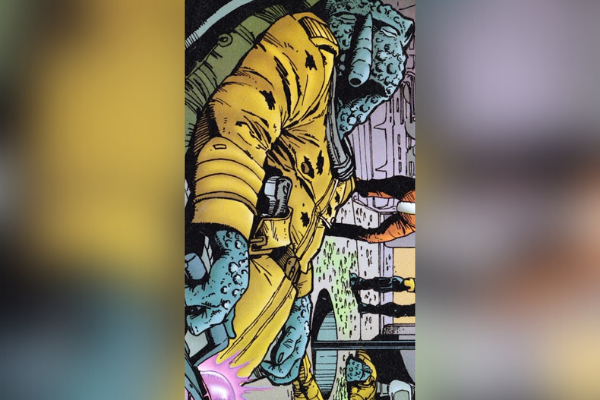
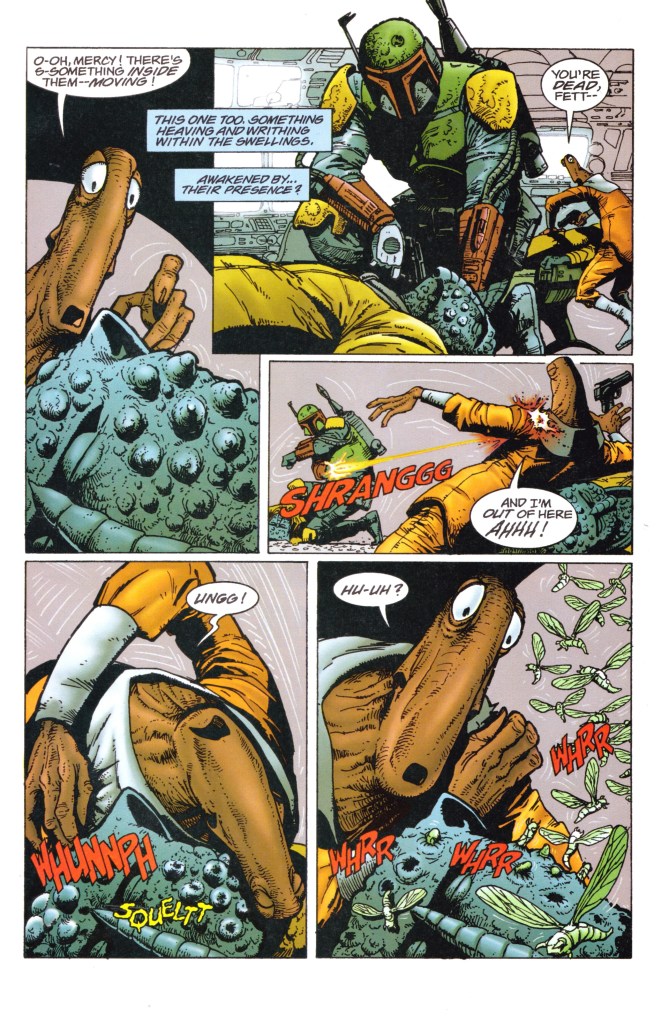
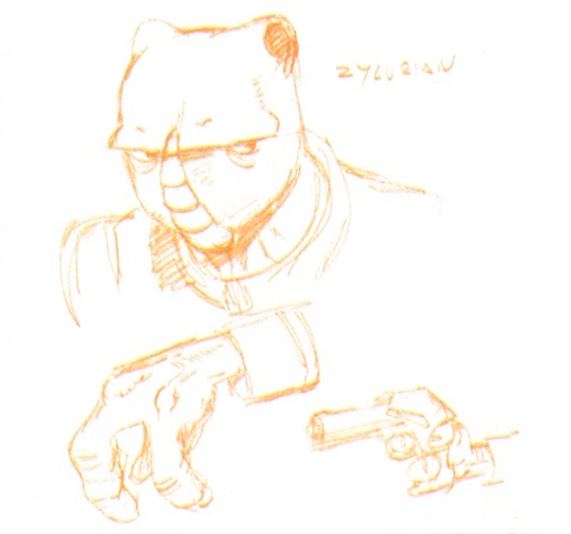
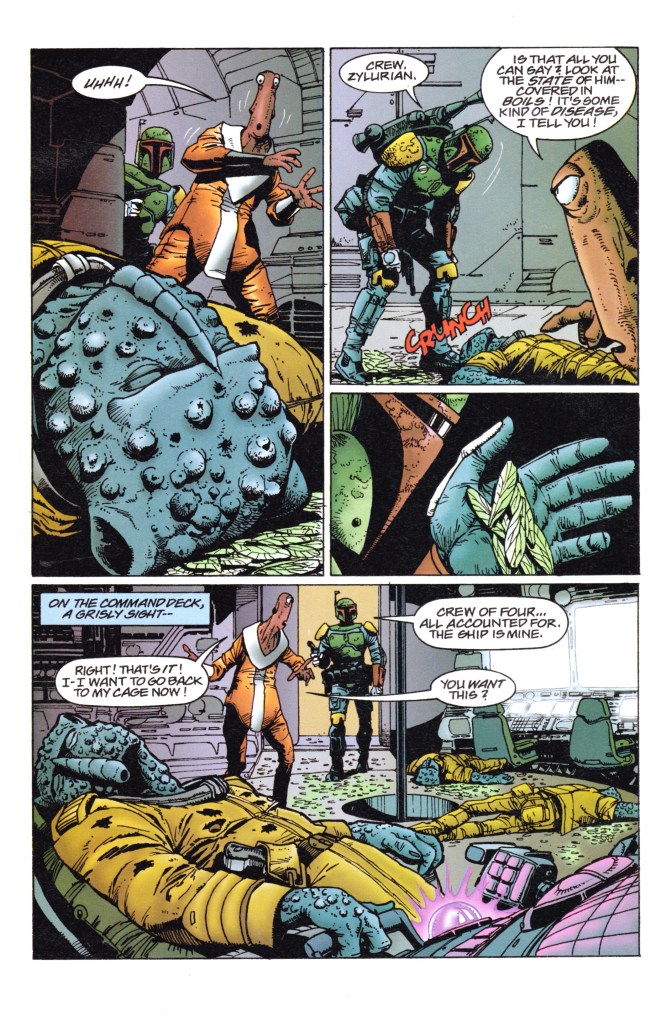
Biology: This species has only ever made one appearance in Star Wars, so our information on them is limited. But what we do know is that the Zylurians were a humanoid species, slightly larger than the average Human, with thick bodies and appendages. Their thick skin was dark grayish-blue or grayish-purple in coloration, and while all colored illustrations appear to depict them as being covered in large bumps or warts, those were actually just swarms of insectoid “Ubuugan Fleshborers” burrowed under their skin, and the average, healthy Zylurian appeared to have smooth skin. They all also had massive three-fingered hands, with very small fingernails.
Their wide necks gave way to a rounded head sporting a protruding brow, and appeared to be a long, ribbed snout. This snout ended in a circular opening, and served as their nostril as well as potentially their mouth. This is because there was no visible mouth or mouth-like opening beneath their snout, although there were two aural cavities present on the upper sides of the head which appeared to serve as ears.
Lore: Very little is known about the Zylurians at this time. We do know they hailed from the Mid Rim world of Zyluria, nestled within the Juvex Sector’s Senex-Juvex region. Because of this, the Zylurians had been a servant species of the various Senex-Juvex Ancient Houses for millennia. Zyluria itself was covered in lush plains and was said to be a rather tame planet, although given it’s location along the Carsanza System Hyperlane, there’s a fair chance they were often visited by outsiders. We also know a number of them worked as the crews or spacefaring haulers by the end of the Galactic Civil War, and also may have had some long-standing allegiances to the Sith, although that detail remains a bit hazy.
Legends/Canon: The Zylurians’ only appearance so far has been relegated to Star Wars Legends.
Unexplored: Within Canon, like so many other EU-first species, the Zylurians are a blank slate. If we stick to what we know about them from Legends, however, a few questions can be raised and subsequently explored to help us better write Zylurian characters in the future. When were the Zylurians first discovered, and by whom? Were they truly servants of the Sith, and how long were they subjugated by the Senex-Juvex Houses? Were they ever relieved of their duty to said houses? Did they have any additional allegiances? And why did a number of them take to the stars to work on ships like the Mingula? (Also, is it possible they shared some relationship with the Ubuugans, or were their similarities simply due to a designer having certain design preferences that they relied on within a given time?)
Exploring these questions, along with general worldbuilding elements like their history, traditions, economy, society, culture, alliances, diet, professions, home environments, connection to the Force, etc. will really help flesh out the Zylurians and make what is otherwise a fairly forgettable, one-off species something much more memorable. In fact, exploring them further just with illustrations alone. or even simply producing general physical, biological, or anatomical descriptions, would help immensely with understanding this creature better, and thus utilizing them better as well.
Additional Notes: This is one of those rare cases where we were given a brief look at a species, but every in-universe instance we’ve ever seen was already dead, so we’ve never actually seen a living, breathing (if they do that) Zylurian in Star Wars. They are one of those species that is a prime target for canonization within something like The High Republic multimedia event, and I would definitely not be mad if they were even just referenced in this way. Although, I would sort of like them to be mentioned alongside the Ubuugans, as I find species who have a counterpart or relative race are always just a little bit more interesting, and I would love further (or even just any) exploration regarding the connection between the two.
Additional Images:
 Star Wars Fan Publications
Leave a comment